Physics
Here’s how Rudolph’s light-up nose might be possible
Simple chemistry could give the reindeer his famously bright snout. But physics would make it look different colors from the ground.
Simple chemistry could give the reindeer his famously bright snout. But physics would make it look different colors from the ground.
Human activity can cause “healed” faults to release their stored strength, triggering unexpected quakes in tectonically stable regions.
Postmenopausal women who listened to self-guided hypnosis recordings daily for six weeks saw meaningful improvements in hot flash symptoms.
Ancient collagen preserved in the bones of extinct Australian mammals is revealing their evolutionary relationships, leading to some surprises.
Math and physics explain the anguish of a golf ball that zings around the rim of the hole instead of falling in.
“Magic-angle” graphene may provide new clues into poorly understood unconventional superconductors, which operate at higher-than-normal temperatures.
Like exercise, gratitude takes many forms. Finding the right practice, research shows, is up to the individual.
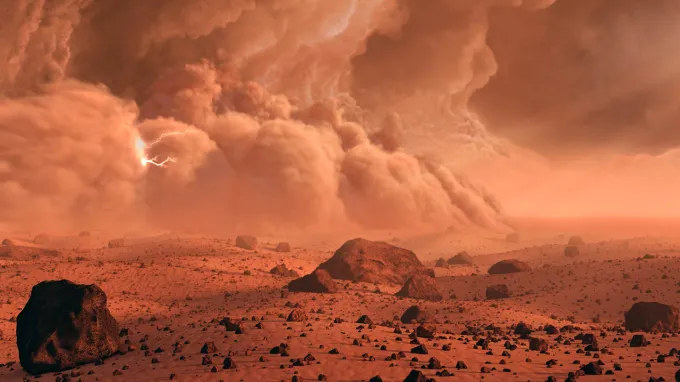
A microphone on NASA’s Perseverance rover recorded the sounds of electrical discharges generated by dusty gusts.
People who use search engines develop deeper knowledge and are more invested in what they learn than those relying on AI chatbots, a study reports.