This bright orange life-form could point to new dino discoveries

The reflected infrared light of bone-loving lichen can be detected by drones
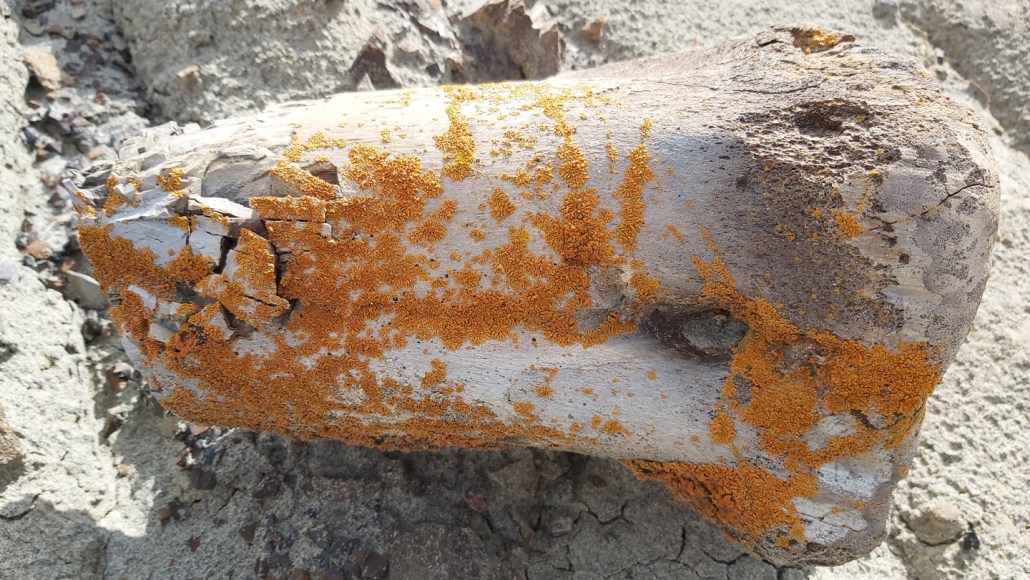
A weathered piece of bone lying on the ground, covered in patches of bright orange lichen.

Orange lichen growing on dinosaur bones (one shown) in Dinosaur Provincial Park can be detected by drones, potentially facilitating new finds.

Brian Pickles

Tiny life-forms with bright colors might point the way to big dinosaur bone discoveries.

In the badlands of western Canada, two species of lichen prefer making their homes on dinosaur bones instead of on the surrounding desert rock, and their distinct orange color can be detected by drones, possibly aiding future dino discoveries, researchers report November 3 in Current Biology.