Brainless sponges contain early echoes of a nervous system
Cells crawling around digestive chambers might help coordinate feeding
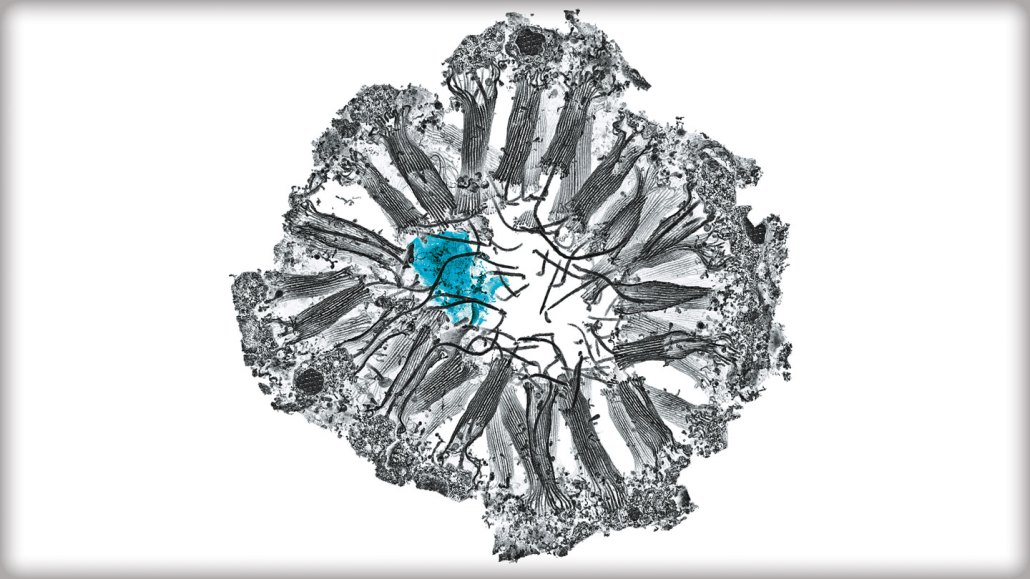
The digestive chambers (one shown) of a sponge (Spongilla lacustris) move water and nutrients through the animal. Neuroid cells (one colored blue in this electron micrograph image) make close contact with cellular tendrils called cilia (thin black tendrils in the center of the image), perhaps to tell them to stop waving, researchers found.
Jacob Musser, Giulia Mizzon, Constantin Pape, Nicole Schieber, Creative Team/EMBL