LHC set to see beyond Higgs
Next run of proton collisions seeks signs of new physics
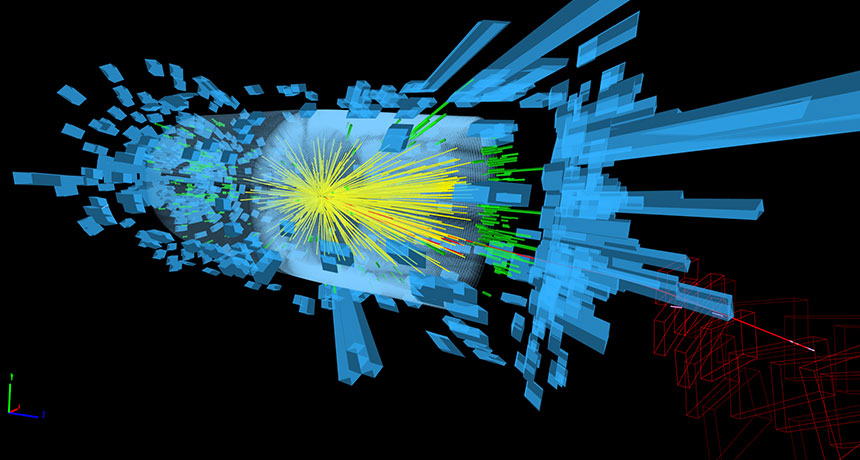
BACK TO WORK The CMS detector tracks the trajectories of particles (yellow and red lines) created in proton collisions at the Large Hadron Collider on June 3 — the first day of data collection after more than two years of upgrades. The green and blue bars represent the amount of energy deposited by different types of particles.
CMS/CERN
When researchers operating the Large Hadron Collider, or LHC, outside Geneva discovered the Higgs boson, it ended a decades-long effort to fill the final gap in physicists’ catalog of matter’s particles and forces.