Jupiter’s Great Red Spot explained
Vertical gas flow may be key to massive storm’s longevity
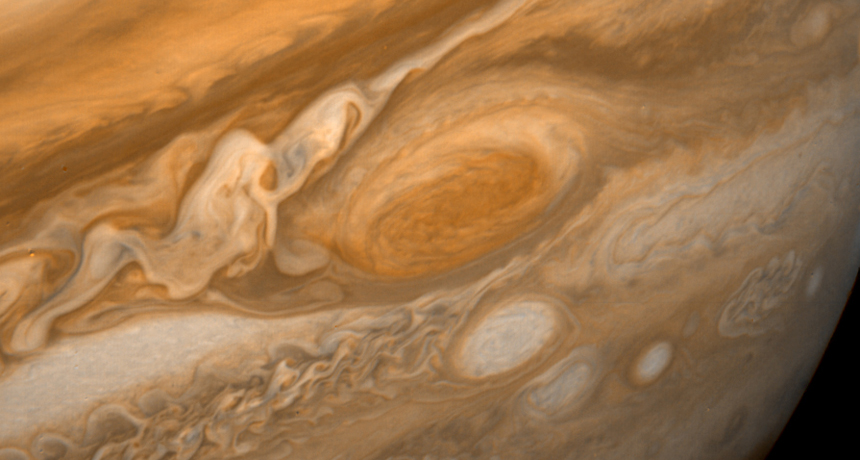
SUPER SWIRLER Jupiter’s Great Red Spot, which has a diameter twice that of Earth’s, has been churning since at least the 1830s. A new computer simulation explains the massive storm’s longevity.
JPL-Caltech/NASA