HIV hides in growth-promoting genes
Virus can spur infected cells to divide, creating long-term reservoirs of infection
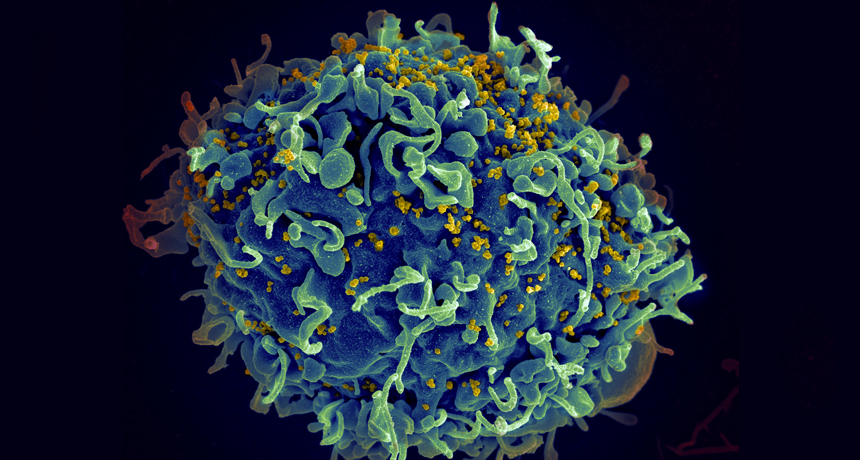
HIDEOUT HIV (yellow) infects immune cells called T cells (blue), as seen in this scanning electron micrograph. The discovery that HIV inserts itself in a host’s genes related to cell growth may help explain how the virus persists in the body for so long.
NIAID