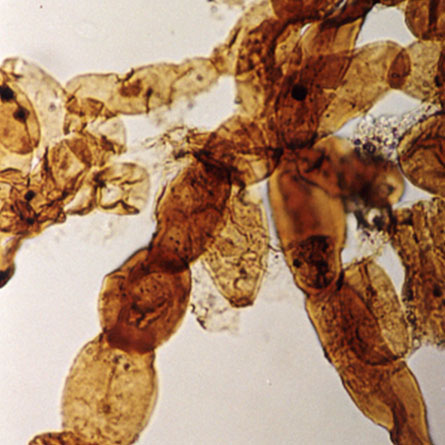
Fungi thrived during mass extinction
Fossil analyses hint that several species made the most of Earth’s largest mass die-off
Microfossils that show up in large quantities in ancient rocks deposited during Earth’s largest mass extinction are fungal spores, not algae as some recent studies had proposed, new research suggests.