A flexible bone that helps mammals chew dates back to the Jurassic Period
The structure may have helped give rise to the Age of Mammals, a new fossil suggests
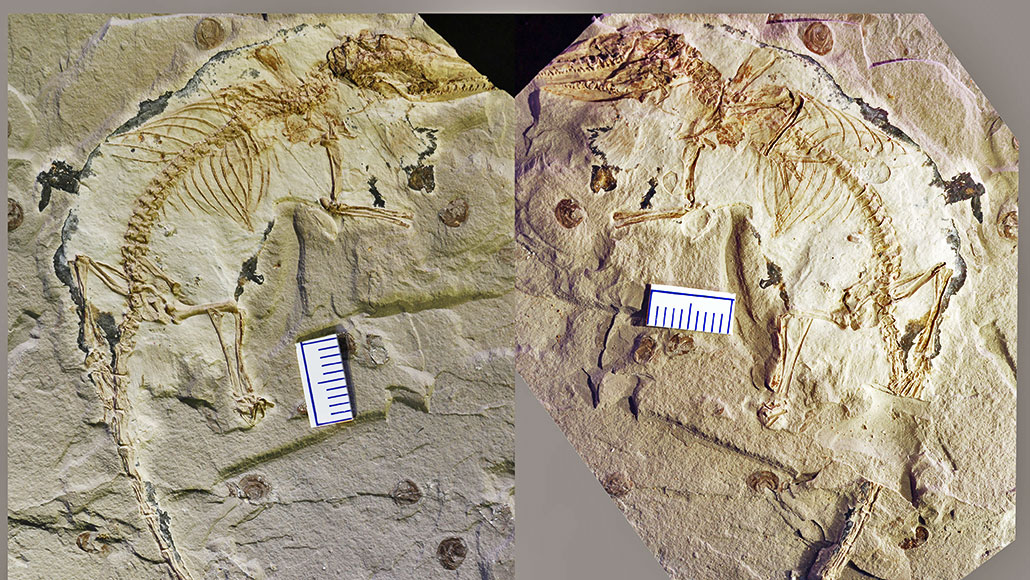
JURASSIC CHEWER This fossil of the shrew-sized mammal ancestor Microdocodon gracilis, which lived about 165 million years ago, reveals that the shape of the hyoid, a flexible bone that aids in chewing, is similar to that of modern mammals.
Z.-X. Luo/Univ. of Chicago