Climate change made Siberia’s heat wave at least 600 times more likely
Extreme temperatures January to June 2020 led to wildfires, thawing permafrost and an oil spill
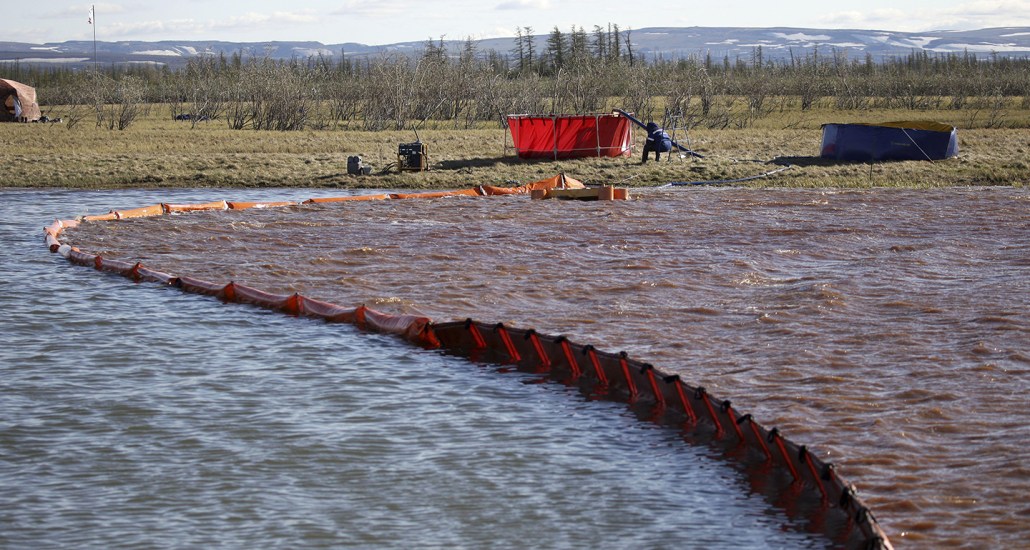
Thawing, unstable permafrost led to the collapse of a fuel tank in the Russian mining city of Norilsk on May 29, 2020, spilling at least 21,000 metric tons of oil. A cleanup operation deployed containment booms on the Ambarnaya River (shown on June 6).
Kirill Kukhmar/TASS/Alamy Live News