Archaeologists tie ancient bones to a revolt chronicled on the Rosetta Stone
The skeleton provides a rare glimpse into an uprising around 2,200 years ago
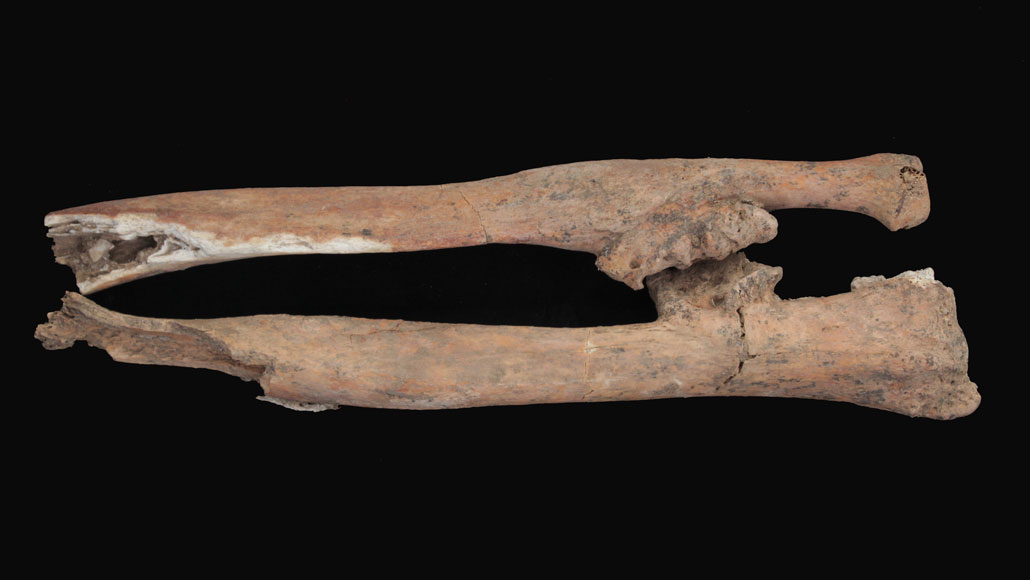
Lower arm bones from a man’s skeleton excavated in Egypt display damage possibly caused by combat during a military uprising mentioned in writing on the famous Rosetta Stone.
R. Littman and J. Silverstein